

CYCAS REVOLUTA THUNB
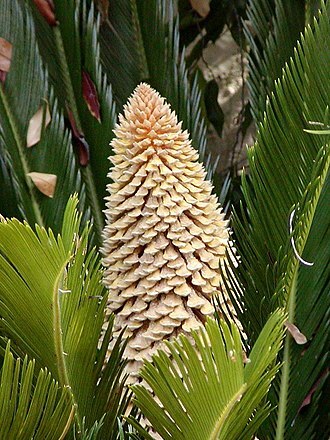
Cycas revoluta, commonly known as the Sago Palm, is a popular ornamental plant that is often mistaken for a palm tree. However, it is actually a gymnosperm, more closely related to conifers.
Key Characteristics:
Slow Growth:
It is a slow-growing plant, often taking many years to reach its mature size.
Thick Trunk:
It has a thick, woody trunk that is covered in a fibrous coat.
Pinnate Leaves:
The plant produces large, feathery, pinnate leaves that emerge from the top of the trunk.
Dioecious:
It is a dioecious plant, meaning that male and female reproductive structures are on separate plants.
Toxic Seeds:
The seeds of the Sago Palm are toxic and should not be ingested.
Uses:
Ornamental Plant:
: The Sago Palm is a popular ornamental plant due to its unique appearance and low-maintenance nature. It is often used in gardens, landscapes, and as a houseplant.
Food Source:
The starchy pith of the trunk can be processed into a flour called sago, which is used as a food source in some cultures. However, it is important to note that the raw pith is toxic and must be processed properly before consumption.
While the Sago Palm is a beautiful and relatively low-maintenance plant, it is important to handle it with care, as all parts of the plant are toxic if ingested.
ISO 9001:2015 CERTIFICATE

Institute Innovation Council

ICT ACADEMY CERTIFICATE
